The StrategicVault
Connecting Success
Your agency's potential isn't gone. It's locked. Here's the key: a repeatable cycle for turning strategic plans into executed results.
Opens the book's page on Amazon.
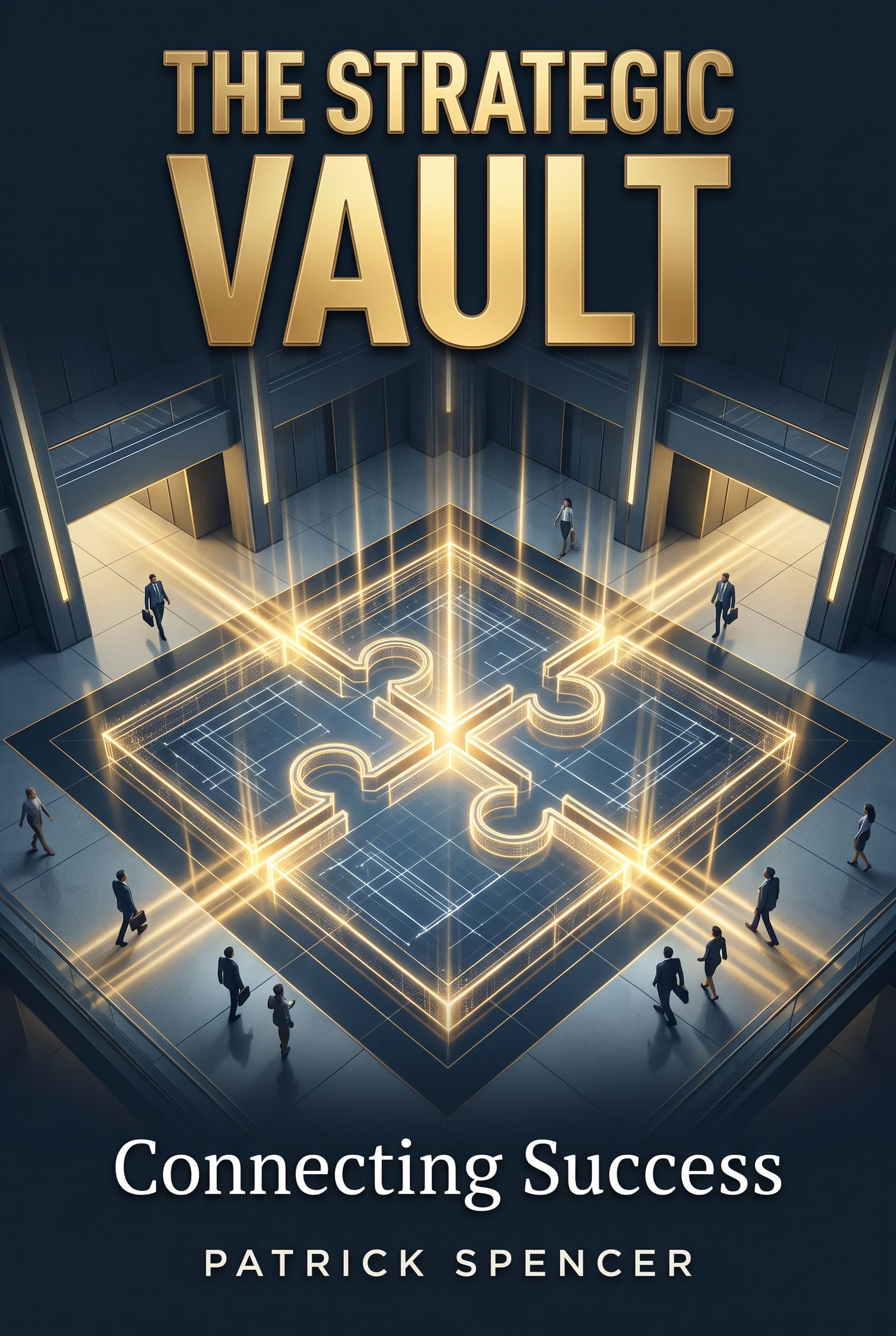
For the people who run public agencies
Your agency's potential isn't gone. It's locked.
Here's the key.
This book is written for public-sector leaders, agency heads, program managers, and strategy practitioners in county, state, and federal civilian agencies who need a repeatable system for turning strategic plans into executed results. It names six kinds of unrealized potential held in the Strategic Vault, and it shows the building blocks that release them.
- Integrated GRC
- A culture of agility
- Hardwired communication and accountability
- Transformed daily operations
- Diagnostic tools
Working notes from the manuscript
Measure before you fix.
The lessons are operational, not inspirational. Each one is a rule you can check against your own plan on Monday morning.
- Measure before you fix. You cannot fix what you cannot accurately measure and understand.
- Every RACI row needs exactly one accountable lead. Two A's means no accountability.
- A done criterion turns 'configure MFA' into a testable, observable pass condition.
- Security first is not just a value. It is a scheduling constraint that shapes the entire timeline.
- A two-month hiring slip on the critical path becomes a two-month miss on a legal audit deadline.
Intent is not a schedule.
Most plans fail in the gap between intent and daily work.
The Strategic Vault, Introduction
A plan describes what the organization intends to do. A schedule commits to when, by whom, in what order, and who answers if it doesn’t happen.
Chapter 9: Implementation Planning
“Communicate regularly” and “keep them updated” aren’t engagement approaches. They’re intentions.
Chapter 3: Stakeholder Analysis
The Connecting Success cycle
Four phases. Sixteen stages. Fifty-eight Steps.
The Connecting Success cycle moves through four phases and 16 stages that produce 58 Steps, so the plan becomes daily work instead of a document on a shelf.
Learn
Prepare
Perform
Review
The working documents inside
Stakeholders
Stakeholder Register, Power-Interest Grid, Stakeholder Analysis Matrix
Position
Competitive Position Map, SWOT Analysis, Benchmark Comparison Report, Industry Map Diagram
Execution
Implementation Timeline, Detailed Action Plans, Critical Path Diagram, RACI Matrix
Review
Lessons Learned Report, Best Practices Guide, Improvement Recommendations
Resilience
Organizational Resilience Framework and a seven-stage transformation roadmap
A sourced point is a fact. An unsourced point is an assumption, and a strategy built on assumptions can’t be defended.
Chapter 4: Competitive Analysis
Close the gap between intent and daily work.
The Strategic Vault: Connecting Success, by Patrick Spencer. One cycle, the frameworks behind it, and the working documents an agency needs to carry a strategy from the plan into the schedule.
You cannot fix what you cannot accurately measure and understand.
The Strategic Vault, Introduction
The key is on Amazon. Open the vault.